The real meaning of Yadavas Clans —
The earliest Aryan people who settled in these parts seem to have been the Yadus who find mention in the Rigveda and whose favourite river was the Yamuna.The chief sources for the early history of this region are ,however ,the traditions Incorporated in the Brahmanical , Jain and Buddhist literature .
It is said that Yadu was the eldest son of Yayati ,the great -grandson of Pururvas Aila (who himself was a grandson of Manu Vaivasvata ) ,the progenitor of the Lunar race of the ancient Kshatriyas.Yayati was a great conqueror and emperor and the Mathura region seems to have been include in his empire .He nominated his youngest son as. succeesor to the thorne being displaced with yadu who ,however ,being a strong man ,proved himself to be the most capable of all his brothers .Although given as his share merely the territory watered by the rivers Chambal , Betwa and Ken , he soon entender it into a powerful kingdom ,which probably include the district of Mathura as well..After Yadus death , his descendants (who came to be known as the Yadavas /Yaduvanshis) rules over the northern portion of the kingdom (including Mathura ).
The word “Yadava ” is admittedly a vedic patronymic derived from Yadu .The chiefs of this Tribe was titled as Yadava .
Mahabharat says — “It has been remberbed the Yadavas were the descendants of Yadu , the son of Yayati -Nahusa. “The Philologists declare that the ” Y” in “Yadava “may be replaced by “J” ,that is both the forms “Yadava ” and “Jadava “are permissible and therefore interchangeable . According to several historians (Wilson , Elliot ) The Yadava is a Sanskrit word and it’s hindi version is Jadon .From Yadavas to Jadavas and then to Jadons was an early etymological transformation (Cunningham.A.,p2Reports 1882-83 ,Gahlot, J.S.pp.593-597 )
The Yadavas are again separately treated in the purans they have no right to be Kings owing to the alleged curse of Yayati.
The modern Real Yadavas Clans —
The real modern Yadavas clans are Jadons ,Bhattis , Chudasamas Sarvaiyas,Raizadas ,Jadejas Jadhavas,Surasenas ,Banafars and Wadiyars yaduvanshi Kshatriyas etc and their sub -branches.
The old Ruling States of Real Yadavas—-
Their ruling States were Karauli ,Jaisalmer, Sirmur /Nahan ,Rampur Bushahar ,Kutch ,Navanagar /Jamnagar ,Gondal ,Rajkot,Dharol ,
Devagiri ,Dwarsamudra ,
Vijayanagar and Mysore .
History of Bhatis,Chudasamas and Jadejas clan origin —
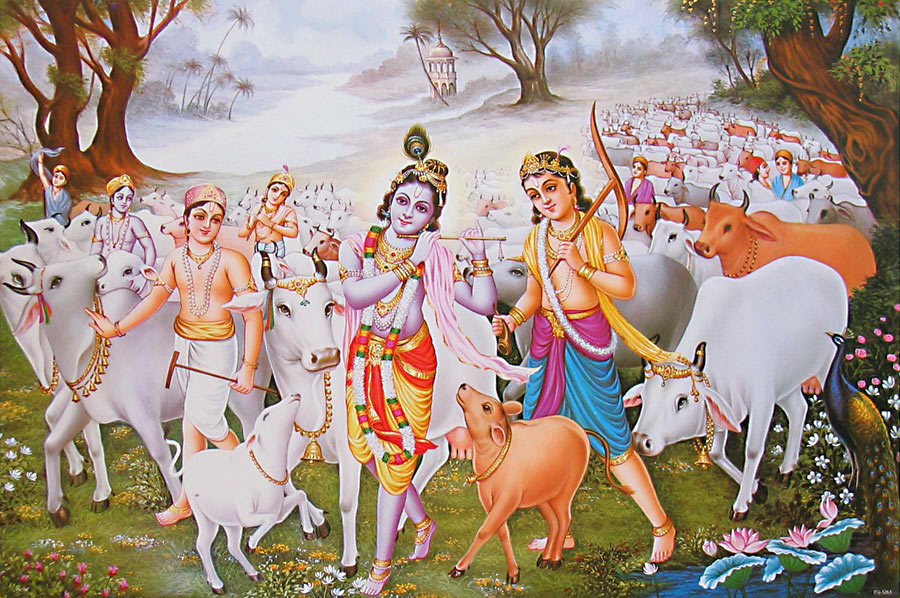
The famous Shri Krishna, founder of the Yadava (Jadava or Jadu ) dynasty, had a son, named Samba, by his wife, Jambuvanti. There flourished one, Devendra, in his line, 80 degrees removed from him. He had four sons, Aspat, Gajpat, Narpat, and Bhupat. Of these, Aspat embraced Islamism. Bhupat became the founder of the Bhatti tribe of Rajputs, while Rajputs, tracing their predigree to Samat, the son of Narpat, came to be known as Samas. The Jadejas are a more off-shoot of the Sama tribe of Rajputs. Gajpat had a son, named Chuda Chandra, and it is to him that the Chudasama Rajputs owe their origin.
History of Jadon clan origin —
The traditional genealogists assert that the Yadavas (modern Jadons ) of Karauli have descended from one of the Surasena or Vrishni Yadava branches. These Yaduvansis , of course claim descent from Krishna , the acknowledged lord of Mathura after the death of Kansa .There early history , therefore consists , of a number of the popular tales of Krishna derived from the Mahabharata and the Puranas.But the real history begins with Dharampala , the 77th in descent from Krishna according to the list of the chroniclers .He was the first who bears the name of “Pala “, which has descended in the family of the Karauli Raja to the present day.His probably date is about 800A.D.
The origin of the word Jadon —
The word Jadon ,is traced by Sir Henry Elliot to Yadu and Yadava ,but it would perhaps be more correct to say that Jadon ,Jadu , and Yadava are etymologically the same ,the former being corruptions of the last.The tribe traditionally belongs to the Lunar Race and professes to trace it’s descent in the direct line from Krishna .Yadu (according to the same writer , following Tod )is the patronymic of all the descendants of Budha (See the genealogical table of Krishna’s descent in Mr.Growse’s Mathura , pp.52) ,the ancestor of the Lunar race , of which the most conspicuous clans are now the Bhattis , Wadiyars of Mysore , Jhareja and Jadhavas of Devagiri, Vijayanagara and Dwarasamudra also.
The Yadavas/Yaduvanshis /Jadons Of Mathura in Pre-Medieval Period —
The chroniclers
state that a descendant of this Yadava branch, king Brahmapala , ruled over Mathura and its hinterland around AD 879 .
The descent of the Karauli Yadavas (part of the old Surasena group) is taken from Brahmapala through a King Jayendrapala (Jaitapal ) down to King Vijaypala who shifted the capital from Mathura to Bayana in the mid-eleventh century to whome the building of the fortress of Vijayamanargarh is unanimously attributed and his
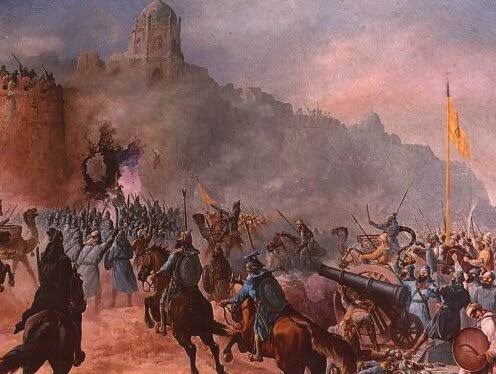
successors, including Tahanpal, Kumarapal etc., Following the occupation of their territories by Muhammad of Ghor in 1196 during the reign of Kumarapal, this branch of the Yadavas lost its power and prestige over the ensuing century and a quarter.
They apparently sought refuge in the wilderness to the south of Tahangarh, and when pressed further, moved across the River Chambal into the jungles of Sabalgarh, wher their succeeding generations consolidated their hold, and lent their name to the
tract, which became known as ‘Jadonwati’.
But the Musalmans acknowledged Jadon descent from a very large portion of the Eastern Rajputana from Sohna and Alwar on the west of the Chambal on the east , and from the bank’s of the Jamuna to Karauli and Sabalgarh on the South.These Jadon Musalmans are known as the Khanzadahs .They are found in Mewat area like Alwar,Bharatpur and Gurganv districts of Rajasthan and Hariyana.
The Minor Estates of Jadon Kshatriya’s in U.P ,Rajasthan ,and Madhya Pradesh —
Uttar Pradesh State—
The minor estates of Jadon rajputs are Somana ,Beerpura ,Gabhana ,
KaurahRustampur ,Baranadi ,
Panchon in Aligarh district ,Hasayan ,Mendu,Dariyapur in Hathras district , Awagarh in Eta district and some other old estates are Kotla ,Umargarh ,Narkhi ,Jondhari ,
Neemkhera and Okhara in Firozavad district now.
Rajasthan State–
Sirmathura,Rijhouni,Bilouni in Dholpur district.
Madhya Pradesh—
Kathoun ,Datana ,Kathiwara, Raghunathpura ,Gober gondi .
Karauli Yadavas / Jadons Kshatriya’s Genealogy From Pre-medieval to Medieval Period —
The founder of Karauli Yadava / jadon Rajvansh family was Maharaja Vijayapala of Bayana 88th generation after Shri Krishna .His son Tahanpala founded Thahangarh .Thahnpala’s son Dharmpala Dholdera now called Dholpur.Dharmpala’s son Kunwarpala founded Kunwargarh fort in karauli area .
A genealogy given in a work called the Vritta-vilas by Yadunath 126, states that after Kumarapal came, in turn, Ajaypal, Haripal, Sahanpal, Anangapal, Prithvipal, Rajapal, Trilokpal, Bapal Dev, Aasal Dev, Sahas Dev, Gughal Dev(Gokul Dev), and his son Arjun Dev. If the Ajaypal, Haripal and Sahanpal listed in Yadunath’s genealogy are identical to the Ajaypal, Haripal and Sahanpal named in inscriptions found in the Mahavan area , it would imply that Kumarapal’s direct line ended with his defeat. On the other hand, the Vritta-vilas may have confused and combined together the names of rulers of
two sub-branches of one family. It is possible that Ajaypal was a brother or close relative of Kumarapal. He may even have been a son, in which case one would assume that Ajaypal was a co-ruler during his father’s lifetime over the areas where his inscription was found! It was during the reign of Gughal (or Gokul) Dev’s son, Arjun Dev, also called Arjunpal, that the clan’s fortunes eventually revived. Arjunpal (r. 1327-61), son of Gughal Dev (or Gokul Dev), “…taking advantage of the unpopularity of Miyan Makhan of Mandrayal, drove [out] the Turks and established his authority over his patrimony” . He strengthened his position by subduing the local Meenas too, as well as the Panwar Rajputs, who were also strong in the region. Arjunpal also successfully retook
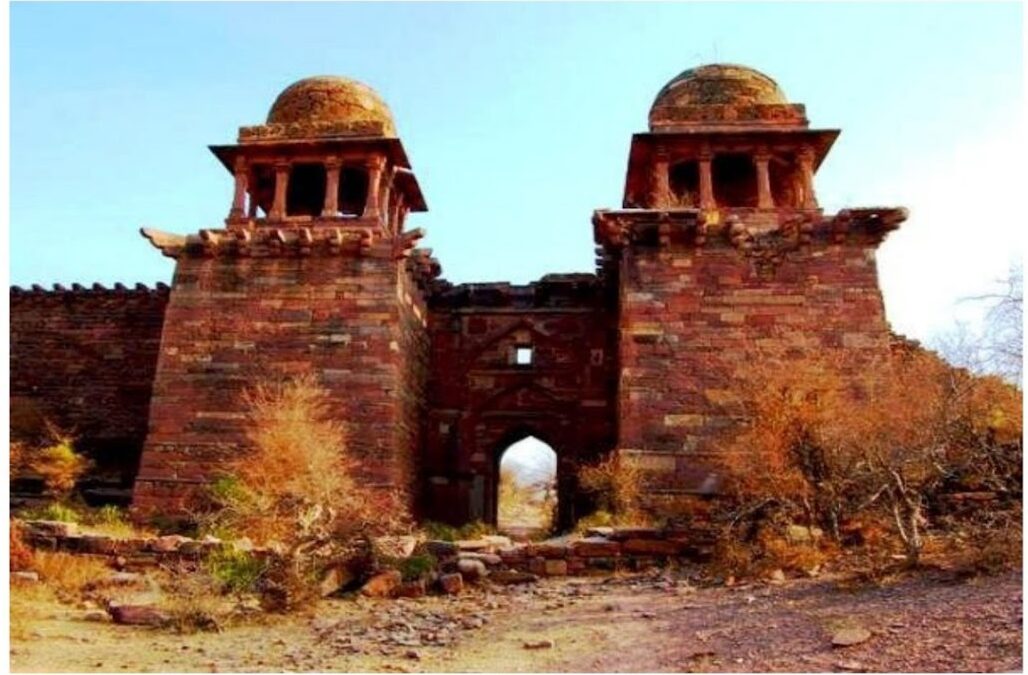
Tahangarh — the fortress-capital of previous chiefs of his line — from the Delhi Sultanate’s control.
Arjunpal is credited with founding the town of Kalyanpur (present Karauli) in VS 1405, i.e. AD 1348. (Karauli lies about forty kilometres from Tahangarh).The town was reputedly resplendent, according to the Khyat tradition, with many
temples, mansions, gardens and lakes, besides the royal palace . This would remain the capital of his descendants for nearly seven hundred years.Among Arjunpal’s successors were Vikramaditya, Abhaychand
(Abhaypal), Prithvipal (Prithipal), Udaichand (Udaipal), Rudra Pratap, Chandrasen (Chandrapal), Gopal Das, Dwarka Das and Jagmani. (The names of
the various rulers listed in the Vritta-vilas are slightly different. According to that text, after Arjun Dev (Arjunpal) came Vikramaditya, Vakhatavilas, Abhaychandra, Prithviraj, Rudra Pratap, and then Chandrasen, etc). It was during the rule of Prithvipal, in the first quarter of the fifteenth century, that the ancestral fort of Tawangarh (Tahangarh) was wrested afresh from the Yadavas
by Afghans . The local Meenas too proved a formidable adversary for Prithvipal, and he failed in his attempt to suppress them.
However, it seems he
was able to repulse an attack by the ruler of Gwalior.The reigns of Udaichand (Udaipal), Rudra Pratap (d. 1449) and Chandrasen (Chandrapal) followed. In AD 1454, Chandrapal (who had
succeeded Rudra Pratap in 1449), was defeated by Malwa’s powerful sultan, Mahmud Khalji, who stormed Karauli and seized it. The sultan handed over the
administration of the town to his son, Fidvi Khan. Meanwhile, deprived of his kingdom, the Karauli chief retired to Untagarh, where he lived out the rest of his
life. Chandrapal’s immediate successors ruled over a drastically truncated territory. The fortunes of this branch did not change until the reign of Gopaldas— variously described as Chandrapal’s son or grandson — who took up his
sword to consolidate his position locally. We shall take up the history of Karauli from the reign of Gopaldas in the next chapter.
While one branch of the Yaduvamshi warriors was carving out a new state in the Karauli area, in the Alwar-Bharatpur area the advent of the Turks and
establishment of the Delhi Sultanate as a near neighbour resulted in the further weakening of other local Yaduvamshi chiefs during the AD 1200-1500 period.
There was certain general resistance led by the local chiefs , some of whom found it necessary to re-locate themselves (and their communities), in
strategically defensible locales. Others migrated. Yet, others sank to positions of less prominence, only to be replaced by other, newer, fief-holders and
chiefships. In time, some of these groups and their elite gradually converted to Islam. The Khan-i-Khana and Khanzada (literally, sons of Khans, i.e. great
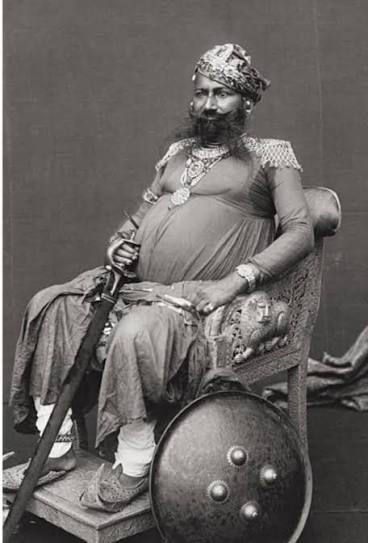
leaders group of the Alwar area are among those who assert that they are descended from Yaduvamshis who had accepted Islam.(One may add here that Powlett, in his Gazetteer of Ulwar noted that various Delhi Sultanate’s records in the Persian language held that the Mewati
chief Bahadur Nahar — discussed further in this chapter, was the ancestor of the Khanzadas, but the family traditions of the Khanzadas themselves traced their lineage further back According to the Khanzada traditions, Adhanpal
(Anandpal), fourth in descent from Tahanpal, the Yadava/Jadon chief of Bayana, temporarily established himself at Durala, amidst the hills around Tijara and Firozpur (in Gurgaon, Haryana), but was later driven to Saretha, some miles to
the north. In the reign of Sultan Feroze Shah Tughlaq of Delhi, Adhanpal’s grandson, Lakhanpal, accepted Islam. He made Kotila his base. Powlett adds
that many Khanzadas insisted that the term is derived from ‘Khan Jadu’ — or ‘Lord Jadu’, “and was intended to render still nobler the name of the princely
race from which they came”
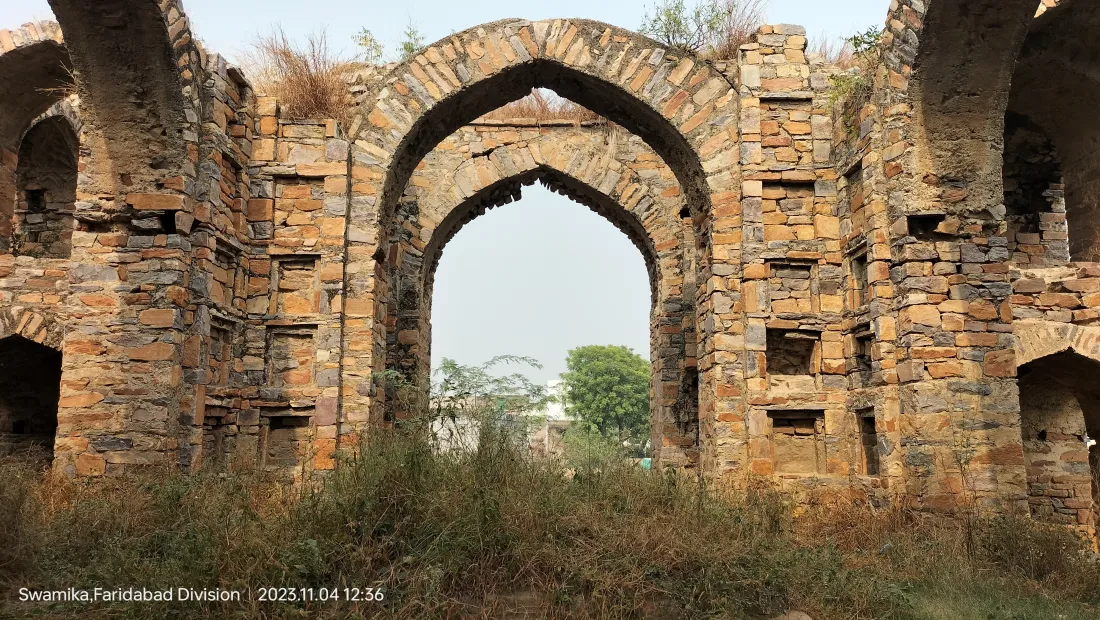
In all this, one cannot be certain whether during this period the ordinary farmers carried on their seasonal activities relatively undisturbed here (and in
other areas of Rajasthan), or whether they were affected drastically in the wake of the Delhi Sultanate’s concentrated effort to subdue and dominate the people
of the ‘Mewat’ region.
References–
1-Gazetter of the Karauli State by Percy Powlett ,1874 .
2-The Chiefs and Leading Families in Rajputana by C.S.Bayley.
3-Rajasthan Through the Ages by Sharma ,Dasharath ,. 1966 ,. page 697-698.
4-A Comprehensive History of India Vol V ,
5-Early Chauhan Dynasties,Delhi (1959) by Sharma , Dasharatha .
6-Rajasthan District Gazetteers :Sawai madhopur by Savitri Gupta ..
7-Veer Vinod by Kaviraja Shyamal Das .
8-Rajputana ka Itihaas by Mm.G.H.Ojha.
9-Bhandarkar’s List of North Indian Inscriptions ,No.71 ,1849.
10-The Bayana Inscription of the year ,PRAS.WC.,1918 ,pp43.
11-Karauli Khyat ; Archeological Survey of India ,Vol.20 ,pp 3 ,38
12-Rajputana -ka -Itihas by Gahlot ,J .S.
13-Rajputana Gazetteer ,Bill III,Karauli State .
14-Imperical Gazetteer of India ,Vol .VII ,Oxford (1901) p.137.,also A.S.Altekar’s.
15-ibid ., Vol .V (.1957),p 120.
16-Dr G.H.Ojha’s account of the Vrttavilasa in the Ojha-nibandha -sangraha .,part 3 ,pp.1ff.,and also the next para but one.
17-Hand book on Rajputs by Cap.A H .Hongey.1899.
18-Sherring M.A.The Tribes and Castes of Rajasthan together with description of the sacred and operated places of historical value in Raj.
19-Crooke ,W.The Castes and Tribes of the Northern -Western .Vol .I to IV.
20-Elliot ,S.H.M . Supplementary glossary of terms used in the Northern -Western Provinces.
21-Cunningham , Report of A tour in eastern Rajputana in 1882-83.pp.6-7.
22-Braj Centre of Krishna Pilgrimage by A.W.Entwistle and Forsten ,E.1987.pp123 ,132.
23-Mathura: A District Memoir by F .S.Growse .
24-Braj ka Sanskritik Itihas bhag I by Prabhu Dayal Mittal.
25-Bayana:A concept of historical archaeology by Dr Rajeev Bargoti .
26-Elliot and Dowson ,History of India as told by its own Historians ,New Delhi ,1990 ,.
27-_Jadon Vansiyonka Itihas -Karauli ka Vijaypal ,No 19/27 ,Alwar Puralekhiy (Non -archival -Library Section)Rajasthan Archives Office ,Bikaner.
28-Yadav Vansho ka Itihas Sambat 867 Vikarmi se 1094 tak ,No 269 ,8/27 ,Alwar Puralekhiy (Non -archival -Library Section ),Rajasthan Archives Office ,Bikaner .
29-Jaisalmer Khyati ,op . cit.,p22.
30-James Tod ,Annals and Antiquities of Rajasthan ,Vol.II.oxford 1920 ,p1182
31-A Handbook of Fighting Races of India .1899 by P.D.Bonarjee.p.61.
32-District Gazetteers . Vol.10,Vol.21 ,U.P.Govt (India) Govt of UP.1959 Mathura.Pp.22-23,50,54.
33-The Native Chiefs and their States in 1877:A manual of reference .By George Aberigh -Mackay.p.19,23-25.
34-Braj :Centre of Krishna Pilgrimage .By A.W.Entwistle 1987 ,p.123,195, 395 ,553.
35-Rajasthan State Gazetteer :History and Culture.,1995,p.17,32,54.
36-The History and Culture of the Indian People :The Struggle for Empire.by G.Allen &Unwin 1951.p.53-56,120,
37-R.Pandae (1978)Yadavas of Sripatha .Shodhak , part 1-3,p 5-10 ,Vol 7,No 46 , pp.5-8.and Shodhak ,Vol .31,No.93 pp.281-292.2002.
38-Bayana:The sources of Mughal Architecture .By Shokoohy.M & Schokoohy .N.
39-History of Rajasthan.by Nima Hooja.
40-A Classical dictionary of Hindu methodology and religion.by John.Dowson.
41-U.P.District Gazetteer Agra ,1965 by Esha Basanti Joshi.pp.27-30.
Author -Dr Dhirendra Singh Jadaun
Village -Larhota near Sasni
District -Hatharas ,Uttar Pradesh Principal Govt .Girls P.G. College , Sawaimadhopur ,Rajasthan ,322001 .